Malvern, PA
(215) 532-3388

6–8 weeks · 12–16 private lessons · from $1,800

Reactivity Rework

Replace reactive chaos with calm control. Stop managing the explosion and start training the pause — with force-free work built for dogs who bark, lunge, freeze, or panic.

Chapter 01

Reactivity is an emotional response, not a lack of obedience

Reclaiming peace with your dog takes more than a “stop” command. A dog who barks, lunges, freezes, or pulls toward a trigger is usually flooded, not disobedient. Telling that dog to sit harder does nothing about what is driving the reaction.

This program is for dogs who have big emotions around people, other dogs, sounds, movement, visitors, or walks. Some are anxious. Some are frustrated. Some are simply overexcited and tip over fast. Anthony works with all of them in Malvern and across Chester County, and he starts by asking what the dog is actually reacting to.

That is also why we do not reach for prong collars, e-collars, or fear-based corrections. They can quiet the outward reaction while leaving the feeling underneath untouched.

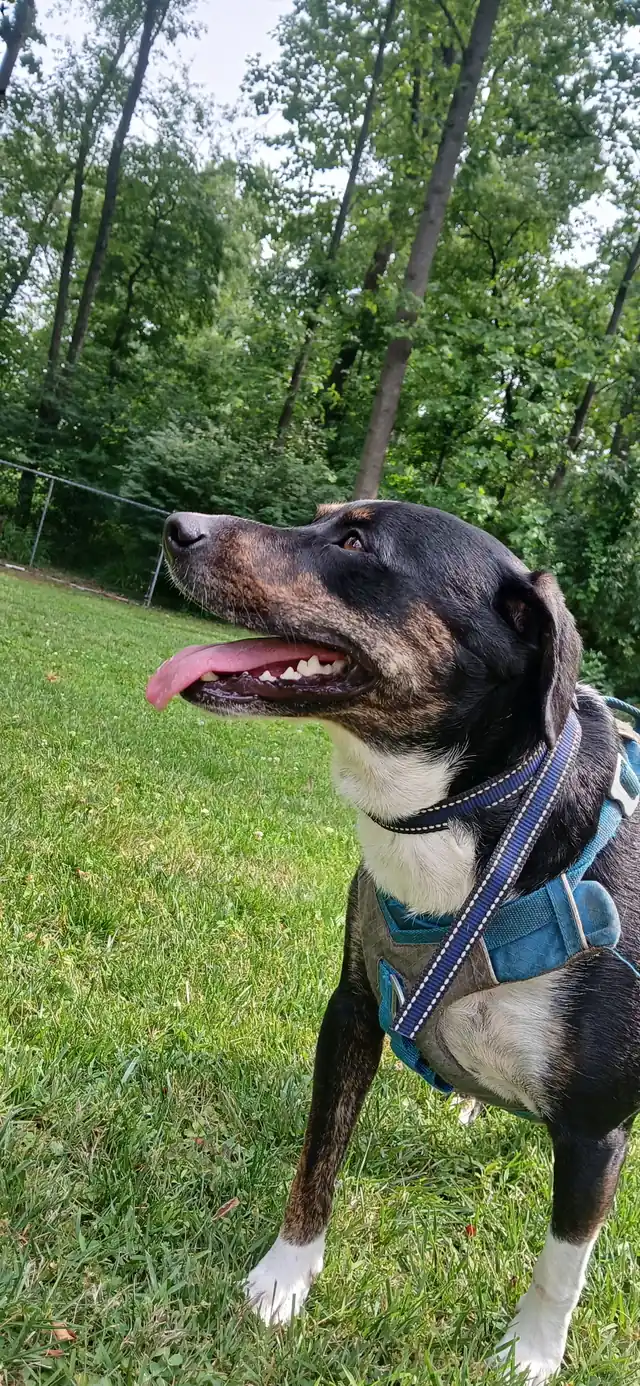
A dog in a blue harness with its tongue out, standing with trees behind

A dog in a blue harness with its tongue out, standing with trees behind

Why this course runs weeks, not days

Reactivity does not improve in a cram session. Dogs learn below threshold, in spaced repetitions, with recovery days in between — sleep is when the learning settles.

So this course runs two lessons a week over six to eight weeks, and the days between lessons are part of the program: a decompression routine that stops your dog rehearsing the explosion while the new patterns take hold.

Chapter 03

Working below the explosion point

We train under threshold, at the distance and intensity where your dog can still think, learn, and respond. Once a dog has tipped into panic, nothing useful is being taught. The skill is catching the subtle early signs and staying on the right side of that line.

Chaos gets replaced with predictable pattern games such as “1-2-3” and “Look At That” (LAT). Your dog gets a repeatable routine to trust, and learns to notice a trigger without escalating, turn away from it, and reconnect with you. Disengagement becomes the dog's own choice.

“Anthony took the time to see Daisy privately, and with patience and skill earned her trust over several weeks of training.” Donald Pigeon, Google review.

Five phases

The roadmap

The pace follows your dog, not a calendar. Each phase has a job, and we move on when your dog is ready — measured, not guessed.

  1. Assess & stabilise

    Your dog's triggers are mapped and threshold distances measured. A management plan stops the rehearsal of reactive behaviour, and calmer routines begin.

  2. Skills

    Focus, disengagement, recovery, and safer choices: Look At That, the 1-2-3 pattern game, an emergency U-turn, a mat settle that works as an off switch, and muzzle conditioning done kindly — so a muzzle is never a fight if one is needed.

  3. Controlled exposures

    Practice around staged triggers at your dog's working distance. The distance closes only when your dog is recovering fast and choosing the new behaviour.

  4. Real world

    Your actual routes and hard places — your street, your park, your front door — with Anthony coaching both ends of the lead.

  5. Handover & maintenance

    You run the full pattern unaided. Threshold distance and recovery time are re-measured against your evaluation numbers, and you leave with a written maintenance plan.

Two numbers

Progress you can measure

Taken at your free evaluation and again at graduation. No vague promises. You will see the change in numbers, and feel it on your own street.

Threshold distance
How close a trigger can be before your dog tips over. It should shrink.
Recovery time
How fast your dog comes back down after noticing a trigger. It should shorten.

The evaluation places your dog

Two tracks

You do not have to guess which level your dog needs. At the free evaluation, Anthony maps your dog's triggers and thresholds and recommends the track that fits.

Track A

Foundations

The foundations level. For one main trigger, mild to moderate.

$1,800

  • 6 weeks · 12 private lessons · 2 per week
  • All five phases, with staged controlled exposures
  • Personalised plan and practical homework
  • Owner coaching — you learn to run the patterns
  • The Echo Dogs Training app
  • One complimentary 30-day follow-up lesson

Track B

Intense Calm

The intensive level. For multiple triggers, or moderate to severe reactivity.

$2,400

  • 8 weeks · 16 private lessons · 2 per week
  • Everything in Track A
  • Additional exposure sessions in public places
  • Priority messaging support between lessons
  • Two follow-ups: 30 days and 60 days after graduation

For dogs who struggle with triggers

Is this the right program for your dog?

It may be, if any of these sound like your week:

  • Your dog barks, lunges, or pulls toward dogs or people on walks.
  • Your dog reacts to sounds, movement, visitors, or neighborhood activity.
  • Your dog becomes overwhelmed and has trouble calming down.
  • Your dog seems anxious, frustrated, or easily triggered.
  • You avoid walks, guests, or public places because of your dog's reactions.
  • You want help without prong collars, e-collars, or punishment-based methods.

Keeping the calm once lessons end

Behaviour returns when structure disappears, so this work is as much about you as it is about your dog. You learn to read the early signs of stress, manage distance, reward recovery, and guide your dog through a hard moment with a steady hand.

The goal is a calmer, clearer handler your dog can trust. Anthony's method rewards faster recovery, not just quiet, and uses the same patterns every time so your dog always knows what comes next.

Start with a free evaluation. Anthony goes through your dog's history and your goals, maps the triggers, and recommends the track that fits. Based in Malvern, serving Chester County and parts of Delaware County, Monday to Friday, 8am to 5pm.